Muerte, Rito y Memoria: un estudio comparativo entre Grecia y Roma desde su formación hasta el siglo I a.C.
DOI:
https://doi.org/10.29393/RH32-25RMMA10025Palavras-chave:
Enterramiento, Grecia, Memoria, Religión, Ritual, RomaResumo
Este artículo tiene como finalidad comparar la estructura de la memoria en Grecia y Roma, concretamente desde el final de la Edad de Bronce hasta el siglo I a.C. Se centrará en tres aspectos fundamentales: la gestión de la muerte, el recuerdo de los orígenes y la memorialización del presente. El procedimiento comparativo permitirá revelar las importantes diferencias que existían entre la cultura griega y la romana con respecto a las formas y medios que adoptaba la memoria. El artículo mostrará, también, hasta qué punto estos tres aspectos estaban estrechamente conectados, de modo que las formas que utilizaban griegos y romanos para conmemorar el presente dependían mucho de la gestión de la muerte y la relevancia de la tumba, y de la conceptualización de los orígenes de la comunidad.
Downloads
Referências
Referencias
Alcock, Susan E. «Tomb Cult and the Post-Classical Polis». American Journal of Archaeology 95, nº 3 (1991): 447-467.
Anderson, Greg. The Athenian Experiment. Building an Imagined Political Community in Ancient Attica, 508-490 B.C. Ann Arbor, Michigan: The University of Michigan Press, 2003.
Anderson, Greg. «Why the Athenians forgot Cleisthenes: Literacy and the politics of remembrance in ancient Athens». En Politics and Orality. Orality and Literacy in Ancient Greece 6, Mnemosyne Supplements 280, editado por Craig Cooper, 103-127. Leiden – Boston: Brill, 2007.
Antonaccio, Carla M. «Contesting the Past: Hero Cult, Tomb Cult, and Epic in Early Greece». American Journal of Archaeology 98, nº 3 (1994): 398-410.
Antonaccio, Carla M. An Archaeology of Ancestors: Tomb Cult and Hero Cult in Early Greece. Lanham, Maryland: Rowman & Littlefield, 1995.
Antonaccio, Carla M. «Traders and ancestors: the “Heroes” of Lefkandi». En Images of Ancestors, editado por Jacob Munk Hojte, 13–42. Aarhus: Aarhus University Press, 2002.
Antonaccio, Carla M. «Religion, basileis and heroes». En Ancient Greece: From the Mycenaean Palaces to the Age of Homer, editado por Sigrid Deger-Jalkotz e Irene S. Lemos, 381-395. Edinburgh: Edinburgh University Press, 2006.
Arce, Javier. Funus Imperatorum. Los funerales de los emperadores romanos. Madrid: Alianza, 1988.
Arce, Javier. Memoria de los antepasados. Madrid: Electa, 2000.
Arce, Javier. «Roman imperial funerals in effigie». En The Emperor and Rome. Space, Representation, and Ritual, editado por Björn C. Ewald y Carlos F. Noreña, 309-324. Cambridge: Cambridge University Press, 2010.
Azoulay, Vincent. Les Tyrannicides d'Athènes. Vie et mort de deux statues. Paris: Seuil, 2014.
Assmann, Jan. Historia y mito en el mundo antiguo. Los orígenes de la cultura en Egipto, Israel y Grecia. Madrid: Gredos, 2010[1992].
Beard, Mary. «A complex of times: No more sheep on Romulus’ birthday». Proceedings of the Cambridge Philological Society 33 (1987): 1-15.
Beard, Mary, North, John y Price, Simon. Religions of Rome, vol 1. History. Cambridge: Cambridge University Press, 1998.
Liou-Gille, Bernadette. Cultes héroïques romains. Les fondateurs. Les Belles Lettres: Paris, 1980.
Balland, André. «La Casa Romuli au Palatin et au Capitole». Revue des Études Latines 62 (1984): 57-80.
Bettini, Maurizio. Dèi e uomini nella Città. Antropologia, religione e cultura nella Roma antica. Roma: Carocci, 2015.
Bettini, Maurizio. «Comparison». En The world Through Roman Eyes. Anthropological Approaches to Ancient Culture, editado por Maurizio Bettini y William Michael Short, 24-46. Cambridge – New York: Cambridge University Press, 2018.
Blok, Josine H. «Gentrifying Geneaology: On the Genesis of the Athenian Autochthony Myth». En Antike Mythen. Medien, Transformationen und Konstruktionen, editado por Ueli Dill and Christine Walde, 251-275. Berlin – New York: Walter de Gruyter, 2009.
Bodel, John. «Death on Display: Looking at Roman Funeral». En The Art of Ancient Spectacle, editado por Bettina Bergmann y Christine Kondoleon, 259-281. Washington DC: National Gallery of Art, 1999.
Boyd, Michael J. «Becoming Mycenaean? The Living, the Dead, and the Ancestors in the Transformation of Society in Second Millennium BC Sourthern Greece». En Death Rituals, Social Order and Archaeology of Immortality in the Ancient World, editado por Colin Renfrew, Michael J. Boyd y Iain Morley, 200-220. Cambridge: Cambridge University Press, 2015.
Brelich, Angelo. Gli eroi greci, un problema storico-religioso. Rome: Edizioni dell'Ateneo & Bizzarri, 1958.
Bremmer, Jan N. «Romulus, Remus and the Foundation of Rome». En Roman Myth and Mythography, Bulletin Supplement of the Institute of Classical Studies 52, editado por Jan N. Bremmer y Nicholas. M. Horsfall, 25-48. London: University of London, 1987.
Briquel, Dominique. «Remarques sur le dieu Quirinus». Revue belge de Philologie et d'Histoire 74, nº 1 (1996): 99-120.
Burgess, Jonathan S. The Death and Afterlife of Achilles. Baltimore, Maryland: The Johns Hopkins University Press, 2009.
Burkert, Walter. Homo necans. Interpretaciones de ritos sacrificiales y mitos de la antigua Grecia. Barcelona: Acantilado, 2013 [1997].
Calame, Claude. Thésée et l’imaginaire athénien. Légende et culte en Grèce antique. Payot: Lausanne, 1990.
Carleton, George H.J. Isotheoi Timai: The creation of the concept and practice of divine-like honours in the Greek cities of the late 5th and early 4th centuries BC. Doctoral dissertation. London: King's College London, University of London, 2002.
Castiello, Antonietta. Augusto il fondatore. La rinascita di Romo e il mito romuleo. Wiesbaden: Harrassowitz Verlag, 2021.
Cavanagh, William. «Burial Customs and Religion. Death and the Mycenaeans». En The Cambridge Companion to the Aegean Bronze Age, editado por Cynthia W. Shelmerdine, 327-341. Cambridge: Cambridge University Press, 2010.
Chaniotis, Angelos. «The Divinity of Hellenistic Rulers». En A Companion to the Hellenistic World, editado por Andrew Erskine, 434-437. Malden, Massachusetts: Blackwell, 2003.
Coarelli, Filippo. «Sepulcrum Romuli». En Lexicon Topographicum Urbis Romae, Roma, vol. 4, editado por Eva M. Steinby, 295-296. Roma: Quasar, 1999.
Coarelli, Filippo. Collis. Il Quirinale e il Vimimnale nell’Antichittà. Roma: Quasar, 2014.
Cornell, Tim J. (coord.). The Fragments of the Roman Historians, vols. 1-3. Oxford: Oxford University Press, 2013.
Currie, Bruno. Pindar and the Cult of Heroes. Oxford: Oxford University Press, 2005.
D’Ambra, Eve. «The imperial funerary pyre as a work of ephemeral architecture». En The Emperor and Rome. Space, Representation, and Ritual, editado por Björn C. Ewald y Carlos F. Noreña, 289-308. Cambridge: Cambridge University Press, 2010.
Davies, Penelope J.E. Death and the Emperor. Roman Imperial Funerary Monuments from Augustus to Marcus Aurelius. Cambridge: Cambridge University Press, 2000.
Diebner, Sylvia. «Tombs and Funerary Monuments». En A Companion to the Archaeology of the Roman Republic, editado por Jane De Rose, 67-80. Malden, Massachusetts: Blackwell, 2013.
Dinter, Martin T. ed. Cultural Memory in Republican and Augustan Rome. Cambridge: Cambridge University Press, 2023.
Dolan, Walter. «The relations of power in the pre-state and early state polities». En The Development of the Polis in Archaic Greece, editado por Lynette G. Mitchell y Paul J. Rhodes, 39-48. London: Routledge, 1997.
Dolansky, Fanny. «Honouring the family dead on the Parentalia: Ceremony, spectacle, and memory». Phoenix 65, nº 1-2 (2011): 125-157.
Dolansky, Fanny. «Nocturnal Rites to Appease the Untimely Dead: The Lemuria in Its Socio-Historical Context», Mouseion 16 (2019): 37-64.
Dubourdieu, Annie. Les origines et le développement du culte des pénates à Rome, Collection de l'Ecole française de Rome 118. Paris: De Boccard, 1989.
Dupont, Florence. Histoire littéraire de Rome. De Romulus à Ovide. Une culture de la traduction. Malakoff: Armand Colin, 2022.
Edwards, Catharine. Writing Rome. Textual approaches to the city. Cambridge: Cambridge University Press, 1996.
Ekroth, Gunnel. «Heroes and hero-cults». En A Companion to Greek Religion, editado por Daniel Ogden, 100-114. Malden, Massachusetts: Blackwell, 2007.
Ekroth, Gunnel. «Pelops Joins the Party. Transformations of a Hero Cult within the Festival at Olympia». En Greek and Roman Festivals. Content, Meaning and Practice, editado por Johann Rasmus Brandt y Jon W. Iddeng, 95-138. Oxford: Oxford University Press, 2012.
Evans, Jane DeRose. The Art of Persuasion: Political Propaganda from Aeneas to Brutus. Ann Arbor, Michigan: University of Michigan Press, 1992.
Favro, Diane. «Moving Events: Curating the Memory of the Roman Triumph». En Memoria Romana. Memory in Rome and Rome in Memory, editado por Karl Galinsky, 85-101. Ann Arbor, Michigan: University of Michigan Press, 2014.
Ferri, Giorgio. «Perché leggere ancora “Quirinus. Una divinità romana alla luce della comparazione storica” di Angelo Brelich». Anabases. Traditions et Réceptions de l’Antiquité 25 (2017): 179-190.
Flower, Harriet I. Ancestor masks and aristocratic power in Roman culture. Oxford: Clarendon Press, 1996.
Flower, Harriet I. «Spectacle and Political Culture in the Roman Republic». En The Cambridge Companion to the Roman Republic, editado por Harriet I. Flower, 322-343. Cambridge: Cambridge University Press, 2004.
Flower, Michael A. «Spartan Religion». En A Companion to Sparta, vol. 2., editado por Anton Powell, 425-451. Hoboken, New Jersey: Wiley Blackwell, 2018.
Franchi, Elena y Proietti, Giorgia. «Commemorating War Dead and Inventing Battle Heroes: Heroic Paradigms and Discursive Strategies in Ancient Athens and Phocis». En Ancient Warfare: Introducing Current Research, editado por Geoff Lee, Helene Whittaker y Graham Wrightson, 231-251. Cambridge: Cambridge Scholars Publishing, 2015.
Fraschetti, Augusto The Foundation of Rome. Edinburgh University Press: Edinburgh, 2005[2002].
Ganzt, Timothy N. «Lapis Niger: The tomb of Romulus». La Parola del Passato 29 (1974): 350-361.
Guarisco, Diana. «Ossa Quirini. Romulus’ mortality and apoteosis between Caesar and Augustus». In Gremium. Studies in History, Culture and Politics 10 (2016): 7-16.
Gradel, Ittai. Emperor Worship and Roman Religion. Oxford: Clarendon Press, 2002.
Hales, Shelly. «Republican Houses». En A Companion to the Archaeology of the Roman Republic, editado por Jane De Rose Evans, 50-66. Malden, Massachusetts: Wiley Blackwell, 2013.
Hall, Jonathan M. Ethnic identity in Greek antiquity. Cambridge: Cambridge University Press, 1997.
Hall, Jonathan M. «Foundation Stories». En Greek Colonization. An Account of Greek Colonies and Greek Settlements Overseas, editado por Gocha R. Tsetskhladze, 383-426. Leiden – Boston: Brill, 2008.
Hölkeskamp, Karl-Joachim. «History and Collective Memory in the Middle Republic». En A Companion to the Roman Republic, editado por Nathan Rosenstein y Robert Morstein-Marx, 478-495. Malden, Massachussetts: Blackwell, 2006.
Holliday, Peter J. The origins of Roman historical commemoration in the visual arts. Cambridge: Cambridge University Press, 2002.
Hunt, Ailsa. «Keeping the Memory Alive: The Physical Continuity of the Ficus Ruminalis». En Memory and Urban Religion in the Ancient World, editado por Martin Bommas, Juliette Harrisson y Phoebe Roy, 111-128. London: Bloomsbury, 2012.
Hurwit, Jeffrey M. The Athenian Acropolis. History, Mythology, and Archaeology from the Neolithic to the Present. Cambridge: Cambridge University Press, 1998.
Jones, Christopher P. New Heroes in Antiquity. From Achilles to Antinoos. Cambridge, Massachusetts: Harvard University Press, 2010.
Kearns, Emily. The heroes of Attica, Bulletin of the Institute of Classical Studies Supplement 57. London: Institute of Classical Studies, 1989.
Lemos, Irene S. The Protogeometric Aegean: The Archaeology of the Late Eleventh and Tenth Centuries BC. Oxford: Oxford University Press, 2002.
Lentano, Mario. Romolo. La leggenda del fondatore. Roma: Carocci editore, 2021.
Lomas, Kathryn. The Rise of Rome. From the Iron Age to the Punic Wars. London: Profile Books, 2017.
Loraux, Nicole. Nacido de la tierra. Mito y política en Atenas. Buenos Aires: El cuenco de plata, 2007 [1996].
Loraux, Nicole. La invención de Atenas. Historia de la oración fúnebre en la ciudad clásica. Madrid: Katz, 2012 [1981].
Malafouris, Lambros. «How Did the Mycenaeans Remember? Death, Matter, and Memory in the Early Mycenaean Wolrd». En Death Rituals, Social Order and Archaeology of Immortality in the Ancient World, editado por Colin Renfrew, Michael J. Boyd y Iain Morley, 303-314. Cambridge: Cambridge University Press, 2015.
Malkin, Iran. Religion and colonization in ancient Greece. Leiden – New York: Brill, 1987.
Malkin, Iran. «Exploring the Concept of "Foundation": A Visit to Megara Hyblaia». En Oikistes. Studies in Constitutions, Colonies, and Military Power in the Ancient World. Offered in Honor of A. J. Graham Gorman, editado por Vanessa B. Gorman y Eric W. Robinson, 195-225. Leiden: Brill, 2002.
Mazarakis Ainian, Alexander. «Reflections on Hero Cults in Early Iron Age Greece». En Ancient Greek Hero Cult: Proceedings of the Fifth International Seminar on Ancient Greek Cult, editado por Robin Hägg, 9-36. Stockholm: Svenska Institutet i Athen, 1999.
Mazarakis Ainian, «Heroes in Early Iron Age Greece and Homeric Epic». En Archaeology and Homeric Epic, editado por Susan Sherratt y John Bennet, 101-115. Oxford: Oxbow Books, 2017.
Mayorgas, Ana. La memoria de Roma: oralidad, escritura e historia en la República romana. Oxford: John and Erica Hedges Ltd., 2007.
Mayorgas, Ana. «Romulus, Aeneas, and the Cultural Memory of the Roman Republic». Athenaeum 98, nº 1 (2010): 89-109.
Mayorgas, Ana. «Los orígenes troyanos de Roma: un mito de la historiografía antigua y moderna». Revista de Historiografía 15, nº 2 (2011): 100-110.
Mayorgas, Ana. «Memoria, espacio y religión en la República romana». En Santuarios suburbanos y del territorio de las ciudades romanas, editado por Julio Mangas y Miguel Ángel Novillo, 31-52. Madrid: Universidad Autónoma de Madrid, 2014.
Mayorgas, Ana. «Acca Larencia o el poder de la memoria femenina en Roma». En XV Coloquio de la AIER. Mujer y poder en la Antigua Roma, editado por Gonzalo Bravo, Sabino Perea y Fernando Fernández, 17-31. Madrid: Signifer Libros, 2018.
Mayorgas, Ana. «Rituel et mémoire féminine à Rome. Les cas de Acca Larentia et de Tarpéia». En Pratiques religieuses, mémoire et identités dans le monde gréco-romain, editado por Delphine Ackermann, Yves Lafond y Alexandre Vincent, 285-300. Rennes: Presses Universitaires de Rennes, 2022.
Mayorgas, Ana. «Humilis multitudo. Pobreza y riqueza en las narraciones sobre el origen de Roma». En Pobreza en el mundo antiguo. XI Coloquio internacional de Historia Antigua, editado por Francisco Marco Simón, Francisco Pina Polo, y Jose Remesal Rodríguez, 99-113. Barcelona: Universitat de Barcelona, 2022.
Montanari, Erico. Fumosae Imagines. Identità e memoria nell’aristocrazia repubblicana. Roma: Bulzoni Editore, 2009.
Morris, Ian. Archaeology as Cultural History. Words and Things in Iron Age Greece. Malden, Massachusetts: Blackwell, 2000.
Nagy, Gregory. The Best of the Achaeans: Concepts of the Hero in Archaic Greek Poetry. Baltimore, London: The Johns Hopkins University Press, 1979.
Ne?as Hraste, Daniel y Vukovi?, Krešimir. «Virgins and Prostitutes in Roman Mythology». Latomus 74 (2015): 313-338.
Orlin, Eric. «Augustan Reconstruction and Roman Memory». En Memory in Ancient Rome Early Christianity, editado por Karl Galinsky. 115-144. Oxford: Oxford University Press, 2016.
Osborne, Robin. La formación de Grecia 1200-479 a.C. Crítica: Barcelona, 1998[1996].
Papadimitriou, Alcestis. Mycenae. Liechtenstein: John S. Latsis Public Benefit Foundation, 2015.
Parke, Herbert W. Festivals of the Athenians. London: Thames and Hudson, 1977.
Parker, Robert. Athenian Religion: A History. Oxford: Clarendon Press, 1996.
Pensabene, Patrizio. «Casa Romuli sul Palatino». Rendicontti della Pontificia Accademia Romana di Archeologia 43 (1990-91): 115-166.
Podlecki, Anthony J. «Cimon, Skyros and Theseus Bones». The Journal of Hellenic Studies 91 (1971): 141-143.
Porter, Danielle. «Romulus-Quirinus, prince et dieu des princes. Etudes sur el personnage de Quirinus et sur son évolution des origines à Auguste». En Aufstieg und Niedergang der Römischen Welt 2.17.1, 300-342. Berlin – New York: de Gruyter, 1981.
Pritchard, David M. «Honouring the War Dead in Democratic Athens». En Democracy and Salamis: 2500 Years After the Battle That Saved Greece and the Western World, editado por Emmanouil M. Economou, Nicholas N. Kyriazis y Athanasios Platias, 285-305. Heidelberg: Springer, 2022.
Proietti, Giorgia. «Annual Games for War Dead and Founders in Classical Times: Between Hero-Cult and Civic Honors». Nikephoros 27 (2014): 199-213.
Proietti, Giorgia. «Beyond the 'Invention of Athens'. The 5th Century Athenian 'Tatenkatalog' as Example of Intentional History». Klio 97, nº 2 (2015): 1-23.
Proietti, Giorgia. Prima di Erodoto. Aspetti della memoria delle Guerre persiane. Stuttgart: Franz Steiner Verlag, 2021.
Proietti, Giorgia. «Ancient reality, modern perceptions. A status quaestionis on the Athenian so-called 'demosion sema' as a (non) National Military Cemetery». Pelargòs 4 (2023): 125-143.
Proietti, Giorgia. «The Athenian ‘demosion sema’ or ‘mnema’: problems of definitions? De-toponimizing Thuc. 2.34.5 and Paus. 1.29.4». Gerión 42, nº 1 (2024): 9-21.
Proietti, Giorgia. «La conmemoración de la guerra y los caídos en la Atenas clásica, y más allá. Un ejemplo de enriquecimiento mutuo entre los estudios sobre la memoria y la historia antigua». Revista Ciencias y Humanidades XVIII, nº 2 (2024): 19-44.
Rüpke, Jörg. Peace and War in Rome. A Religious Construction of Warfare. Stuttgart: Franz Steiner Verlarg, 2019 [1990].
Schilling, Robert. «La déification à Rome. Tradition latine et interférence grecque». Revue des Études Latines 58 (1980): 137-152.
Scullard, Howard H. Festivals and Ceremonies of the Roman Republic. London: Thames and Hudson, 1981.
Segura Moreno, Manuel. Ennio. Fragmentos. Madrid: Consejo Superior de Investigaciones Científicas, 1984.
Semioli, Antonietta A. Tarpeia e la presenza sabina in Roma arcaica. Rome: Bulzoni Editore, 2010.
Simonton, Matt. «The Burial of Brasidas and the Politics of Commemoration in the Classical Period». American Journal of Philology 139, nº 1 (2018): 1-30.
Siwicki, Chris. «The Restoration of the Hut of Romulus». En The Cultural Role of Architecture: Contemporary and Historical Perspectives, editado por Paul Emmons, Jane Lomholt y John Shannon Hendrix, 18-26. London – New York: Routledge, 2012.
Smith, Christopher J. Early Rome and Latium. Economy and Society c. 1000-500 BC. Oxford: Clarendon Press, 1996.
Sourvinou-Inwood, Christine. Athenian Myths and Festivals. Aglauros, Erechtheus, Plynteria, Panathenaia, Dionysia. Oxford: Oxford University Press, 2011.
Taylor, Michael W. The Tyrant Slayers: The Heroic Image in Fifth-Century B.C. Athenian Art and Politics. Salem, New Hampshire: Ayer Company Publishers Inc., 1991 [1981].
Thomas, Rosalind. Oral Tradition and Written Record in Classical Athens. Cambridge: Cambridge University Press, 1989.
Toynbee, Arnold J. Death and Burial in the Roman World. London: Thames and Hudson, 1971.
Valdés Guía, Miriam. El nacimiento de la autoctonía ateniense: cultos, mitos cívicos y sociedad de la Atenas del s. VI a.C., Anejo Ilu. Revista de Ciencias de las Religiones 23. Madrid: Universidad Complutense de Madrid, 2008.
van Wees, Hans. «From kings to demigods: Epic heroes and social change c. 750-600 BC». En Ancient Greece: From the Mycenaean Palaces to the Age of Homer, editado por Sigrid Deger-Jalkotz e Irene S. Lemos, 363-379. Edinburgh: Edinburgh University Press, 2006.
Vé, Karlis Konrads. «Où se trouvait la lupa Ogulnia? Recherche de topographie et d'idéologie romaines». Bulletin de l'Association Guillaume Budé 1 (2012): 148-180.
Vé, Karlis Konrads. «Les liens entre les Lupercales et Romulus dans la tradition romanine». Bulletin de l'Association Guillaume Budé 2 (2016): 96-113.
Vé, Karlis Konrads. Romulus, Quirinus et Victoria: la construction d’une mémoire collective à Rome. Paris: Les Belles Lettres, 2021.
ver Eecke, Marie. La République et le roi. Le mythe de Romulus à la fin de la République romaine. Paris: De Boccard, 2008.
Veyne, Paul. Como se escribe la historia. Ensayo de epistemología. Madrid: Fragua, 1972[1971].
Vukovi?, Krešimir. Wolves of Rome. The Lupercalia from Roman and Comparative Perspectives. Berlin – Boston: De Gruyter, 2023.
Welsh, Tara S. Tarpeia: Workings of a Roman Myth. Athens, Ohio: The Ohio State University Press, 2015.
Whitley, James. «The monuments that stood before Marathon. Tomb cult and hero cult in Archaic Attica». American Journal of Archaeology 98, nº 2 (1994): 213-230.
Zanker, Paul. Augusto y el poder de las imágenes. Madrid: Alianza, 2002[1987].
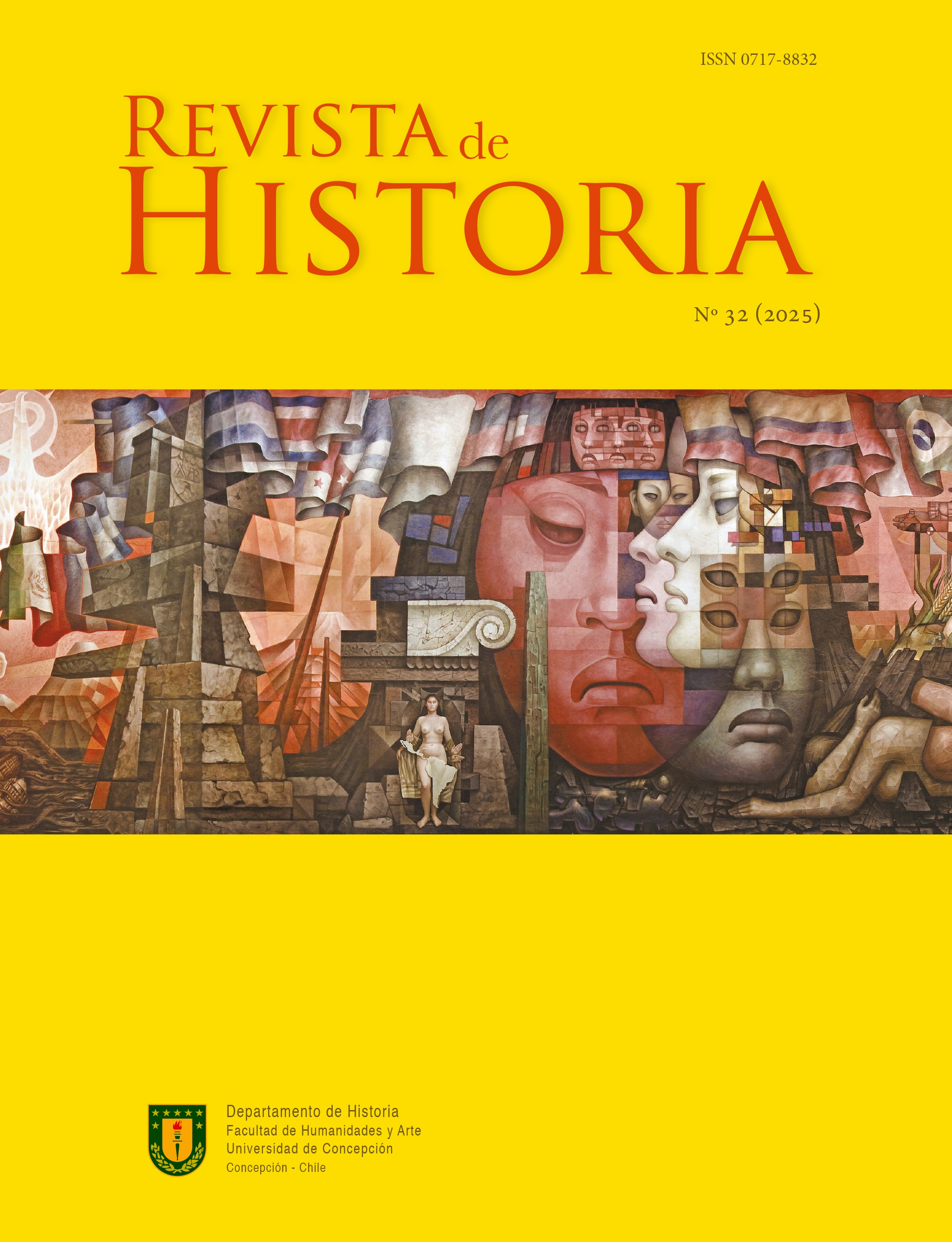
Publicado
Como Citar
Edição
Seção
Copyright (c) 2025 Ana Mayorgas

Este trabalho está licensiado sob uma licença Creative Commons Attribution 4.0 International License.